
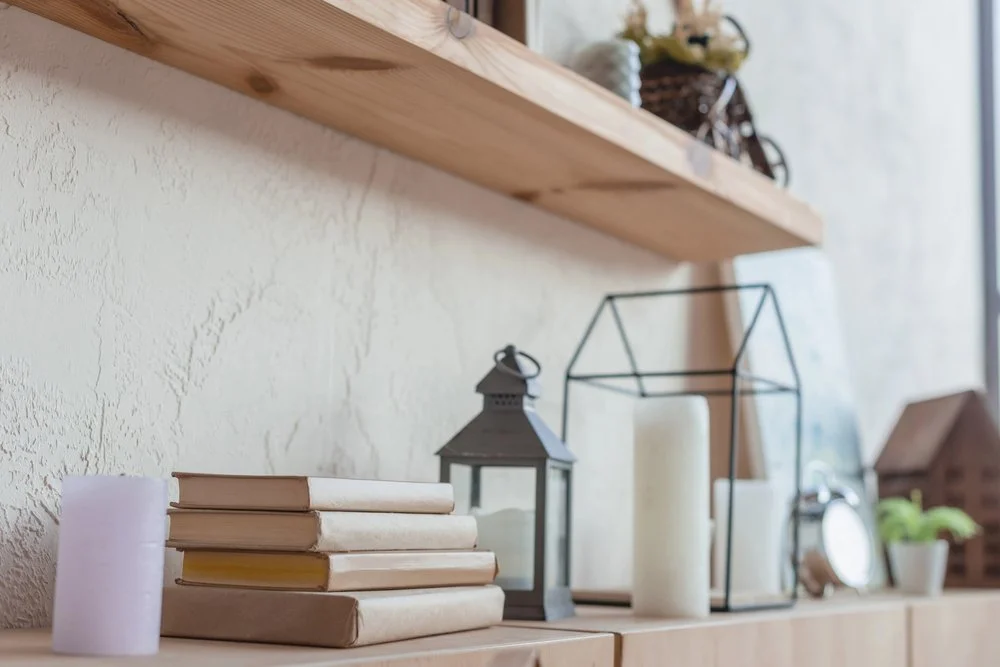
The cookbook belongs in the kitchen. That one's easy.
But what about the novel you're halfway through? The art book you like to flip through for creative inspiration? The TBR stack that's outgrown the nightstand? The comfort books you want to keep around?
Books don't necessarily need one designated address in your home. In fact, we like them better when they make themselves at home.
That might mean the book you're reading stays beside your favorite chair, cookbooks claim a kitchen shelf, and a few old favorites move into the guest room. It might mean there are books on the coffee table because you actually like looking through them—not because their covers happen to match the sofa.
There are practical advantages to spreading your collection around. You can relieve an overstuffed bookcase, make use of small pockets of space, and keep the books you use most where they're easy to reach. But we also just like what books bring to a home. They're interesting. They're personal. And they tell little stories about what the people who live there care about.
It’s all part of something bigger read & nest focuses on: The spaces around us can support the things we want to make time for—or make them slightly harder to do.
In other words, a book on the table beside the chair won't create an extra hour for reading. But when you do sit down? It's right there.
Let the books follow the reading
Your bookshelves can hold your collection. The books you're actually reading are another matter.
If you read before bed, the nightstand is obvious territory. Keep the current book there, maybe along with the next one or two you're considering. We wouldn't recommend relocating your entire TBR to the bedroom unless you find being watched by 37 unread books relaxing.
If you tend to read on the sofa or in a favorite chair, give your current books somewhere nearby to land. The bottom shelf of an end table works. So do a basket, a console, or a small decorative stack on the floor. You don't need to officially declare the corner a reading nook, but your books may do it for you.
And if your favorite reading spot happens to be the porch, family room, or kitchen table, the same principle applies. Let the way you actually read determine where at least some of your books live.
Give some books a room of their own
There are books that just make sense in particular parts of the house but are creative.
Give the kitchen more than cookbooks. Keep the ones you actually cook from within reach, of course. But a blend of food-focused books, gardening books, cocktail books, and travel books can all feel at home here, depending on what you like to browse over coffee or while something is in the oven.
The coffee table deserves books that you like to look at. Art, photography, travel, interiors, fashion, nature, music—whatever makes you want to pick it up and look again. “Coffee-table books” don’t have to be chosen solely because they’re the right size and color for a carefully styled stack, although that’s definitely a consideration. The best rule is to choose books that won’t stay closed for long.

And who says the home office has to be all business? Reference books and books related to your work may naturally collect there. But there’s no reason your shelves can’t also house novels that you can't wait to pick up at quitting time.
We think every guest room should have its own tiny library. Not the books you didn't know where else to put, but a carefully selected group that you'd be delighted to see someone start. Maybe an easy-to-fall-into novel, a collection of short stories or essays, something funny, or a book with a local connection. Books can become a small detail that makes a guest room feel welcoming.
We could go on and on. A stack of art books in the room where you do crafts or paint. Children's books where the family tends to gather. Gardening books near the back door. The point isn't to assign every book to a room. It's noticing when one already belongs there.
Decorate with the books you love the most
This is where we have to admit that books also happen to look really good around a house.
They bring color, texture, and height to a room. A horizontal stack can break up rows of books on a shelf. A few books can share a console with framed photos or things you've collected. An oversized book can give an otherwise empty coffee table something interesting to say.
You can organize bookshelves by color, buy books specifically for display, wrap them to coordinate with your room, or turn the spines around so all you see are neutral pages. There’s no right or wrong way to incorporate books into your décor, but, personally, we'll be keeping our spines where we can read them.
And there's nothing wrong with styling your book collection throughout your home. Move them around. Stack a few. Mix them with other things you love. Leave some breathing room on a shelf if you have it.
Books already carry the interests, memories, and personality of the person who chose them. They really don't need much help making a statement.
Your bookcase doesn't have to hold every book you own
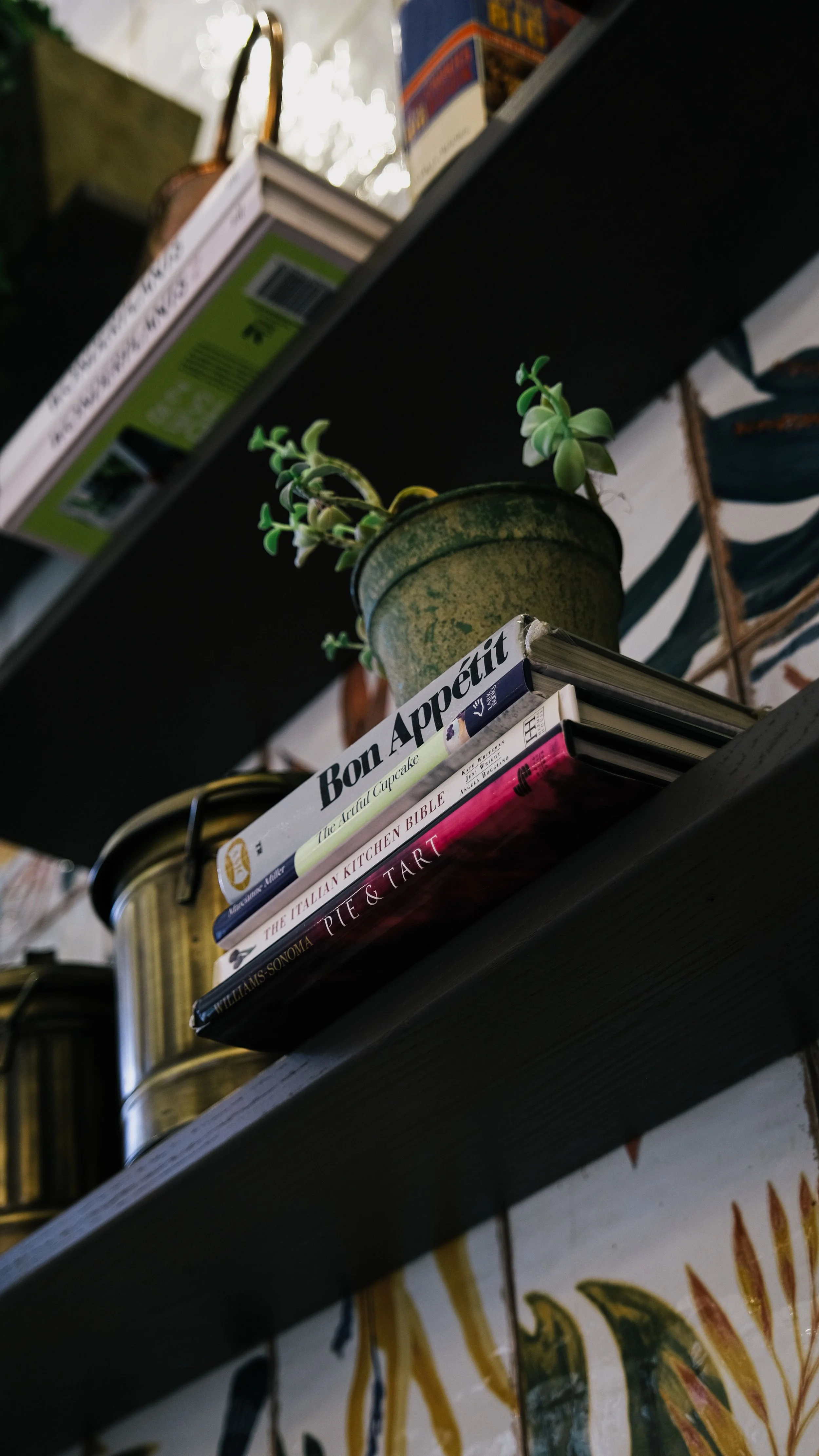
Here’s where the idea becomes surprisingly practical.
If your shelves are already packed, look at the rest of your house before deciding the only answer is another bookcase. There may be plenty of smaller places that can absorb a few books and make good use of them at the same time.
A basket beside a chair. The lower shelf of an end table. A floating shelf on a narrow wall. An underused console or sideboard. A small bookcase in an awkward corner. Even a neat stack on the floor can work in the right spot.
Moving a dozen books into other rooms isn't going to solve a truly heroic book-buying habit. But it can give crowded shelves a little breathing room—and turn spaces you already have into useful book storage.
This can be especially helpful in a smaller home, where dedicating an entire wall to books may not be an option. Instead of asking where you can fit the bookshelf, you can start noticing all the smaller places where a few books could happily live.
A small reality check before putting books everywhere
Now, for the disclaimer. We mean throughout the home somewhat figuratively.
Books and steamy bathrooms aren't the happiest combination. Direct sunlight can fade covers and damage paper over time. Heat and big swings in temperature aren't particularly book-friendly either. The Library of Congress recommends keeping books in relatively cool, dry, stable conditions and away from intense light.
Still, most of us aren't maintaining archival collections. An ordinary paperback can survive ordinary life, but it’s worth giving the books you care about a reasonably comfortable place to live.
So, keep the cookbooks out of the splash zone. Think twice before leaving a favorite book on a sunny windowsill. And definitely don't use your precious first edition copy as bathroom decor.
Make room for books—and the life that goes with them
Books can be stored, organized, and styled. But they can also just be lived with.
It can be the book waiting beside the chair. The cookbook with a flour-dusted page. The ever-changing stack on the coffee table. The old favorite you put in the guest room because you hope someone else will love it. The slightly overambitious selection on the nightstand.
Maybe that's what we really mean when we say a reader lives here. The books aren't just on the shelves. They're part of the life happening around them.
Once the books are all making themselves at home, give your reading chair a once-over. Our guide to finding a comfortable reading chair to match your reading style can help.