
There's no wrong way to organize a bookshelf. But there is a way that's wrong for you — and figuring that out usually takes trying (and abandoning) at least one method first.
So, let's skip that part. Here are five ways to organize your shelves, who each one is actually for, and what you're trading off to get there.
By color
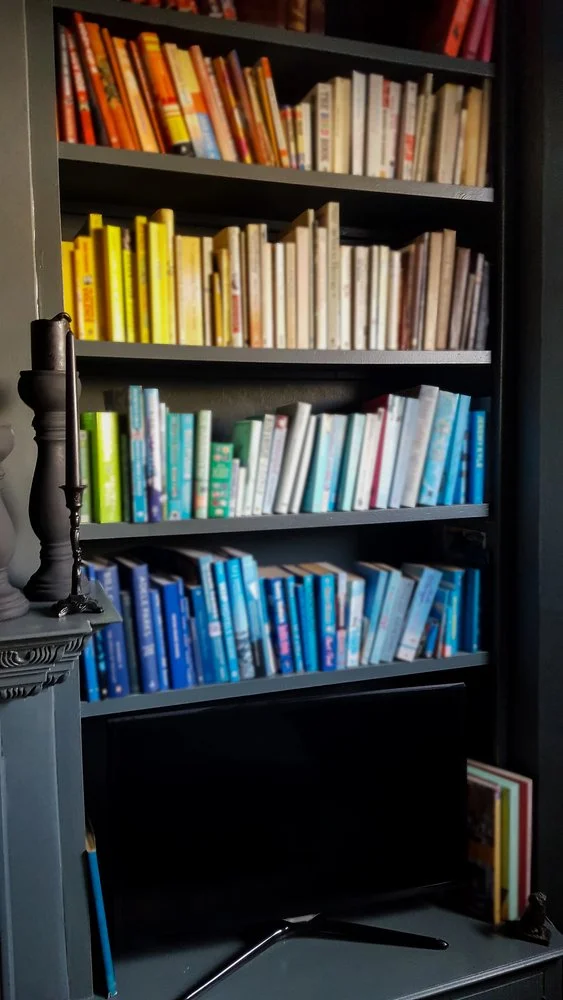
The Pinterest favorite! Group your spines by hue and watch your shelf turn into something people photograph instead of browse.
This is for you if: your reading nook doubles as a design statement, you're the type who likes to gaze at your book collection, and you don’t mind a bit of a search for a title.
Pros:
Genuinely gorgeous. No other method looks this good in a photo.
Zero system to learn — just look at the cover and place it near its color cousins.
Cons:
Finding a specific book means scanning every color, not going straight to a section.
Series get split up unless every book in it happens to share a spine color (they won't).
You'll spend real time re-sorting every time you add a new book, because color placement isn't intuitive to maintain.
By genre
The classic. Fiction here, nonfiction there, mystery, romance, and fantasy each in their own zone.
This is for you if: you read across a lot of categories and want to be able to walk up to your shelf already knowing which section to check.
Pros:
Fast to browse when you're in a specific mood (want a mystery? Go straight to the mystery shelf).
Easy to see your collection's actual shape — you'll notice fast if you own twelve thrillers and zero poetry.
Scales well as your collection grows; genres just get their own subsection.
Cons:
Genre-crossing books (is it fantasy or literary fiction? Is it a memoir or self-help?) will always cause a little friction.
Less visually cohesive than color — it can look more "library," less "curated."
By author, alphabetically
The librarian's method. A to Z by author, no ambiguity and no decisions once it's set up.
This is for you if: you have favorite authors with multiple books and want their full catalog sitting together, or you just don't want to think about it once it's done.
Pros:
The lowest-maintenance system here — a new book has exactly one correct spot.
Great for finding a specific title fast if you remember the author's name.
Keeps an author's full body of work together, which is satisfying if you're a completionist.
Cons:
Doesn't help at all when you want to browse by mood or genre.
Visually, it's the most "utilitarian" option — not much of a design statement.
By mood
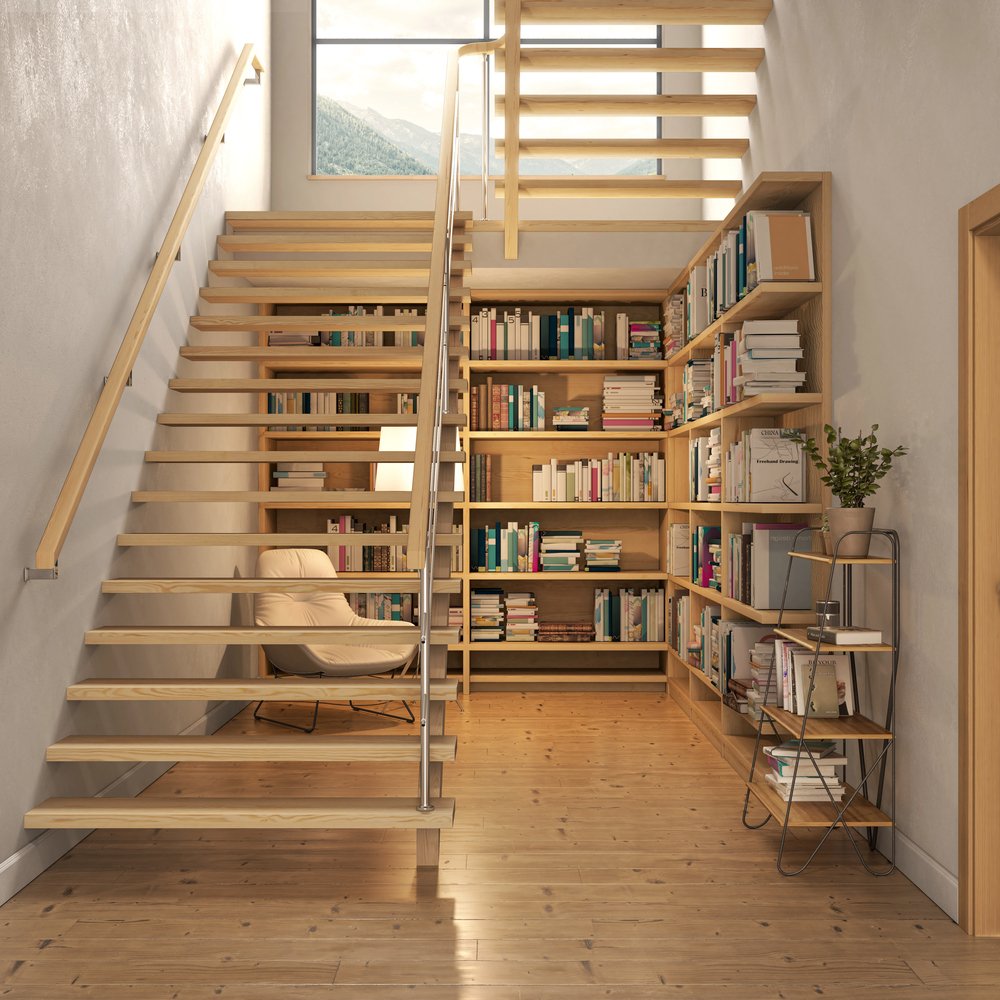
The unconventional one. Shelves grouped by how a book feels rather than what it is — a "cozy and comforting" shelf, a "make me cry" shelf, a "read when you need courage" shelf.
This is for you if: you choose books based on how you want to feel, not what genre you're technically in the mood for, and your reading space is more about vibe than efficiency.
Pros:
Turns browsing your shelf into an experience, not just a search.
Genuinely reflects how a lot of readers actually pick their next book.
Great conversation starter — mood shelves are memorable in a way color-coding isn't.
Cons:
Highly personal system, which means it's hard to keep consistent (is a book "cozy" or "comforting"? Depends on the day.)
Almost impossible for anyone but you to use — guests borrowing a book are on their own.
Takes the most upfront thought of any method here.
By size or height
The practical one, usually chosen by the shelf itself rather than by you. Tall books together, paperbacks together, oversized art books flat on top.
This is for you if: your shelving is a mix of sizes and shapes (built-ins with different clearances, a cube organizer, whatever you found secondhand), and cramming a huge hardcover next to a slim paperback is driving you a little bit crazy.
Pros:
Makes the best use of irregular or mismatched shelving.
Protects books — oversized or delicate spines aren't getting bent to fit a gap.
Genuinely the fastest to set up.
Cons:
Purely functional — no browsing logic at all, so you'll need a good memory (or another system layered on top).
Least personality of any method here.
So, which one?
A quick decision guide, if you're still torn:
Want it to look like a magazine spread? Color.
Want to actually find your books fast? Genre, or author if you’re good with names.
Want your shelf to feel personal, not just organized? Mood.
Working with mismatched or awkward shelving? Size and height, possibly combined with genre as a second layer.
And if you're realizing your actual problem is less "which system" and more "not enough shelf to work with" — that's a sign it's time to look at small-space bookshelf and shelving ideas for apartments, not a new sorting method. Or, if the real issue is that you've got more books than storage, period, start with the best storage solutions for people who own too many books.