
How to read more without spending a fortune
You don't have to buy every book you want to read. In fact, I’d argue you shouldn't.
Sure, there's the obvious benefit: Books can get expensive, especially when you read a lot. But putting some different book-procuring possibilities in play adds something to your reading life. The origin story of where a book comes from—and how it finds its way to you—becomes part of the experience and even part of what you remember about it.
Get everything you can from your library card
The library is the obvious place to start, but there's a good chance your library card can do more than you realize.
Along with borrowing books from the shelves, check out the digital services available through your library. The Libby app lets you borrow ebooks and audiobooks from participating libraries, while Hoopla offers ebooks, audiobooks, and other digital content through participating library systems. Depending on your library and the title, Hoopla may offer instant borrowing without a hold list—which makes it worth checking when the book you want has a long wait elsewhere.
It's also worth finding out whether you're eligible for cards from more than one library system. Libby lets you add multiple eligible library cards and search across your saved libraries. Plus, its Notify Me feature can alert you if your library later adds a digital title it doesn't currently offer.
And don't overlook the decidedly less high-tech interlibrary loan. If your library doesn't have the physical book you're looking for, it may be able to borrow it from another library on your behalf.
The specifics vary from one library system to another, so spend a few minutes exploring yours. You may have a lot more books at your disposal than you thought.
Explore the books that are simply free
Your library isn't the only place to find books that don't cost anything.
If your TBR includes classics or older works in the public domain, there are enormous collections available online absolutely free.
Project Gutenberg offers tens of thousands of ebooks that you can read online or download in several formats. No cost. Standard Ebooks takes public-domain books a step further, creating carefully proofread and beautifully formatted editions designed specifically for modern ereaders.
Prefer to listen? LibriVox has a large collection of free public-domain audiobooks recorded by volunteers.
No, this isn't where you're going to find the buzzy novel everyone is talking about this week. But if you've been meaning to finally read Jane Eyre or revisit an old favorite, there's no reason a lack of a copy has to stop you.
Your next book might already be yours
Before heading to the bookstore or clicking purchase, take a fresh look at the books you already own.
Browse your shelves the way you'd browse a bookstore. That novel you bought two years ago and never got around to reading? Maybe now is finally its moment. The book you started once but weren't in the mood for? It may hit differently this time.
I do this on occasion and never fail to discover forgotten TBR books or an old favorite that hits the spot for a reread.
There's something satisfying about rediscovering a book you already own—especially when you’ve forgotten it was there.
Leave some room for books to find you
Sometimes the best book discoveries happen when you aren't looking for a particular title at all.
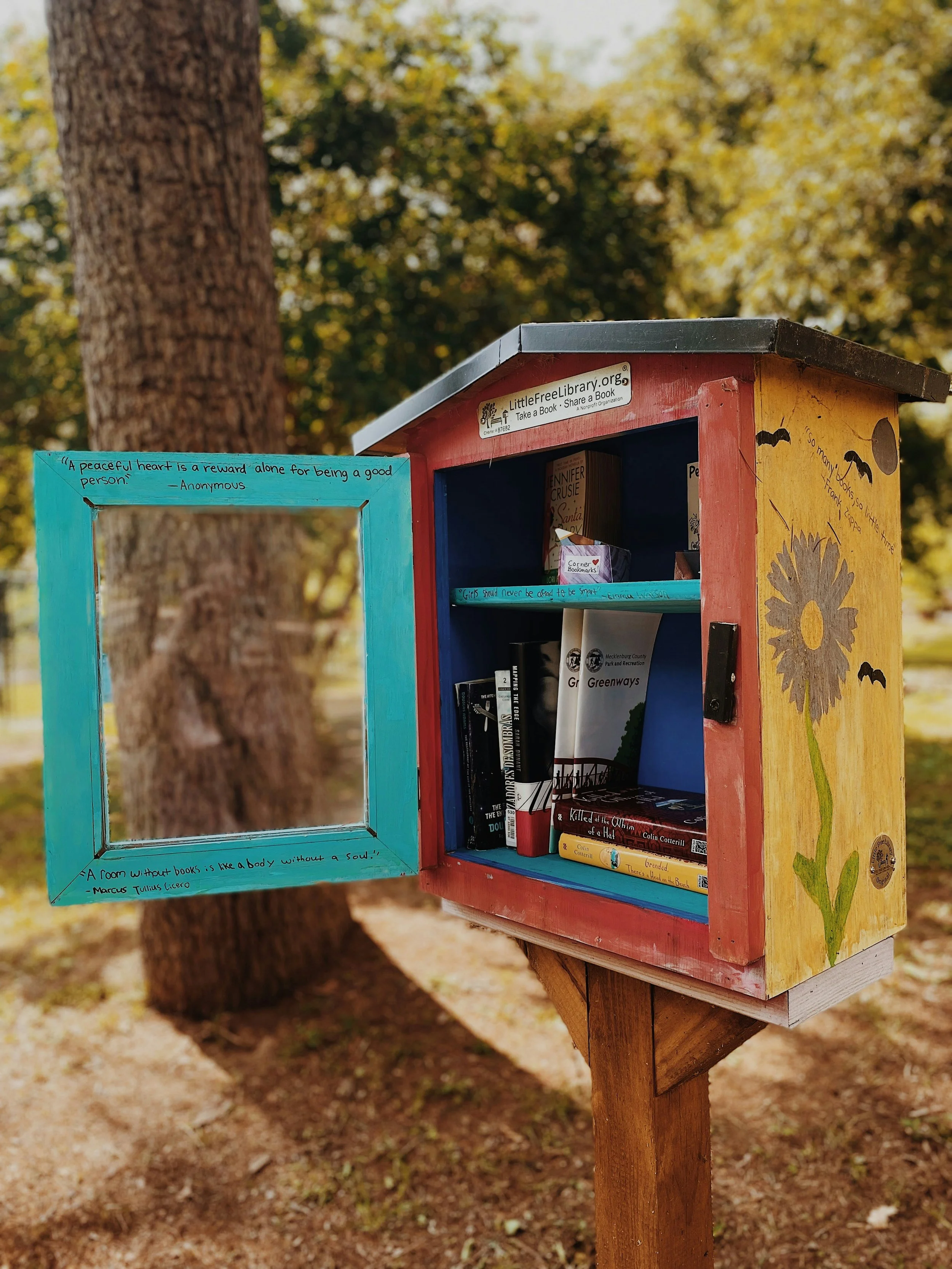
Little Free Libraries are a perfect example. You've probably passed one of those small book-filled boxes in someone's yard or outside a neighborhood business. But did you know there's a Little Free Library map and app that can help you find them?
Instead of waiting until you happen across one, make an outing of it. Find a few Little Free Libraries in your community, gather up some books you're ready to pass along, and go exploring. Leave a book, take a book, and see what you find.
You can create the same kind of serendipity with friends. Invite a few fellow readers to bring books they're finished with and swap. No elaborate book-swap party required. Put the books out, browse one another's stacks, and send everyone home with something new to read. Better yet, the books come with a recommendation from someone who knows your taste.
Library and Friends of the Library sales are another treasure hunt worth trying. Books are often just a few dollars, and the proceeds help support library programs and services. A win-win! Book Sale Finder can help you locate upcoming library and used-book sales in your area—or sign up for its free Sale Mail alerts to stay in the know about sales in your area.
And, of course, there are used bookstores, thrift stores, and neighborhood Buy Nothing groups. The tradeoff with all of these is that you can't necessarily walk in looking for one particular title and expect to find it. But that's also part of the appeal.
You might come home with something you never would have searched for in the first place. And years later, you remember not just the book, but the Saturday morning you found it tucked inside a Little Free Library or the friend who handed it to you and said, "You need to read this."
Buy the books you really want to own
None of this means you should stop buying books. I’m certainly not going to.
It just helps budget-wise to separate the books you want to read from the books you want to own.
Maybe it's a new release from a favorite author. A beautiful edition of a book you love. Something you know you'll reread or want to lend to someone else. Or a book that just belongs on your shelf. IYKYK.
Borrowing, swapping, rediscovering, and buying secondhand leaves more room in your book budget for the books you really want to own.
Because sometimes the library copy is exactly what you need. Sometimes it's the $2 book you stumbled across at a sale. And sometimes you want the brand-new hardcover.
There's room for all of it in a reading life. Enjoy the possibilities.
Related reading: If buying books is one of the pleasures you want to make room for, take a look at Budgeting for Hobbies: How to Fund Your Reading Habit Without Guilt for ideas on giving your reading habit a place in your budget.